This is what you will experience in the first minutes of Leni Riefenstahl’s Triumph of the Will (Triumph des Willens).

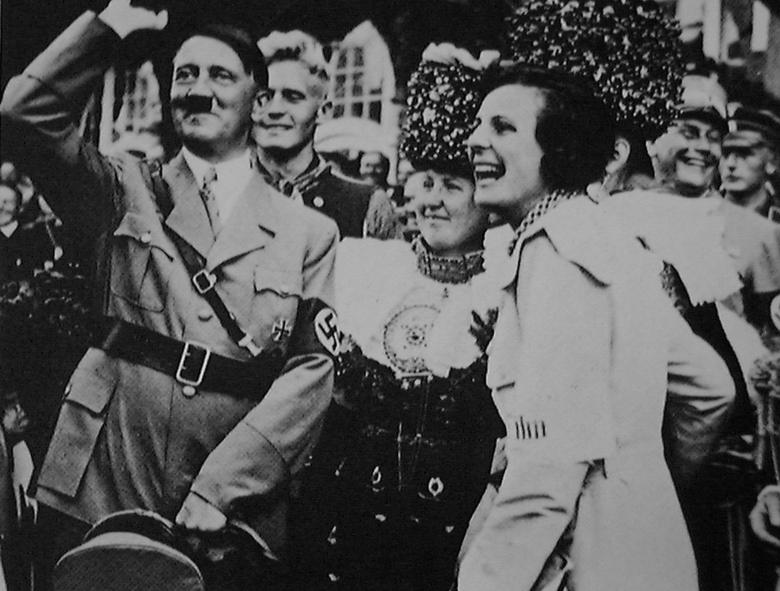
 Riefenstahl was admired by Hitler, and in 1934, she received a call
from Adolf Hitler himself and was asked to make a film of the annual
rally of the National Socialist German Workers party (the Nazi party) –
the largest-ever staged-announcement and demonstration, to all the
world, of German rebirth (Barnouw 101). Hitler insisted it must
be Riefenstahl. She agreed on the condition that no one, not even
Hitler, would interfere with or even see the film until it was finished.
Riefenstahl was admired by Hitler, and in 1934, she received a call
from Adolf Hitler himself and was asked to make a film of the annual
rally of the National Socialist German Workers party (the Nazi party) –
the largest-ever staged-announcement and demonstration, to all the
world, of German rebirth (Barnouw 101). Hitler insisted it must
be Riefenstahl. She agreed on the condition that no one, not even
Hitler, would interfere with or even see the film until it was finished.The film’s impact is said to derive from Riefenstahl’s choreography of images and sounds…
the marching of men,
the waving of banners,
the uniforms,
the swastikas,
the overwhelming cheers,
and smiling children at the front of the crowds, sparkles in their eyes as if it was Santa they were seeing.

Some other techniques that set Riefenstahl and her film apart from others are her unique camera movements and locations. She had thirty cameras in operation in order to make the film. Special bridges, towers, and ramps were built by the city of Nuremberg solely for the production of this film. Dollies were built to move along with marching troops, fire trucks were used to get unique shots of monuments throughout the city, and there was even a 120-foot flagpole that had been outfitted with an electric elevator in order to get wide shots from a bird’s eye view.
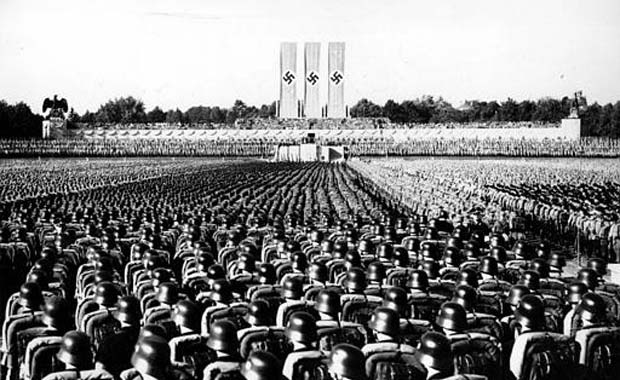
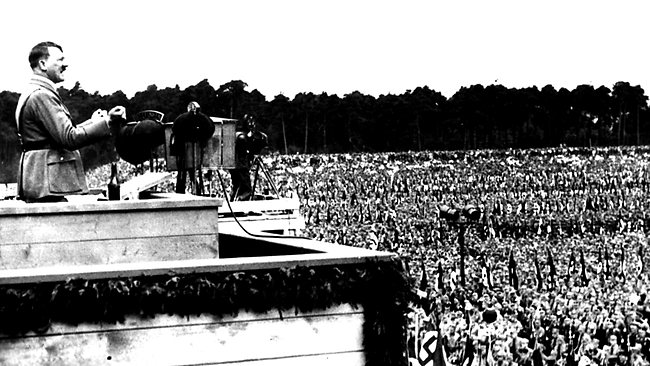
Triumph of the Will premiered in March 1935 and was hailed a masterpiece; inspiring to some, while blood-chilling to others. Her film was considered an overwhelming propaganda success and brought many to the Hitler cause (Barnouw 105). On the other hand, she was scolded for it. No other film has been used by opposition forces as much as Triumph of the Will. “Nothing else depicted so vividly the demoniac nature of the Hitler leadership” (105).
I admire Riefenstahl and her intense efforts as well as creative abilities that were put forth in the making of the film. “She coordinated her forces with an almost maniacal drive and discipline, mirroring the atmosphere of the events themselves” (Barnouw 103). Not only did she practice impressive techniques, direction, and production, but she then spent five months on the editing process, making the film flow in a uniquely intriguing way, before the final product came to fruition. Moreover, I believe it took much bravery to do what she did, especially knowing she was most likely going to be greatly criticized for it in the end.
I found the 1993 interview with Riefenstahl to be very interesting – hearing what she had to say about the film and its’ representation of Hitler years later. She spoke of being intimidated by Hitler, especially when asked to work on such an epic project for the Reich. She said, “He radiated something very powerful … it was frightening” and went on to explain that she was afraid of losing her will and freedom in accepting and making the film. Fortunately for her, it turned out to be quite the opposite, in that she had much more freedom and special treatment than she probably ever imagined.
From Kara Petersen: http://sites.stedwards.edu/comm4399fa2013-kpeters3/2013/09/24/triumph-of-the-will-film-art-or-nazi-propaganda/

No comments:
Post a Comment